The Drone Axis
Russia is providing Iran with intelligence and other support to better target U.S. forces with drones. We should worry about where this axis could lead.

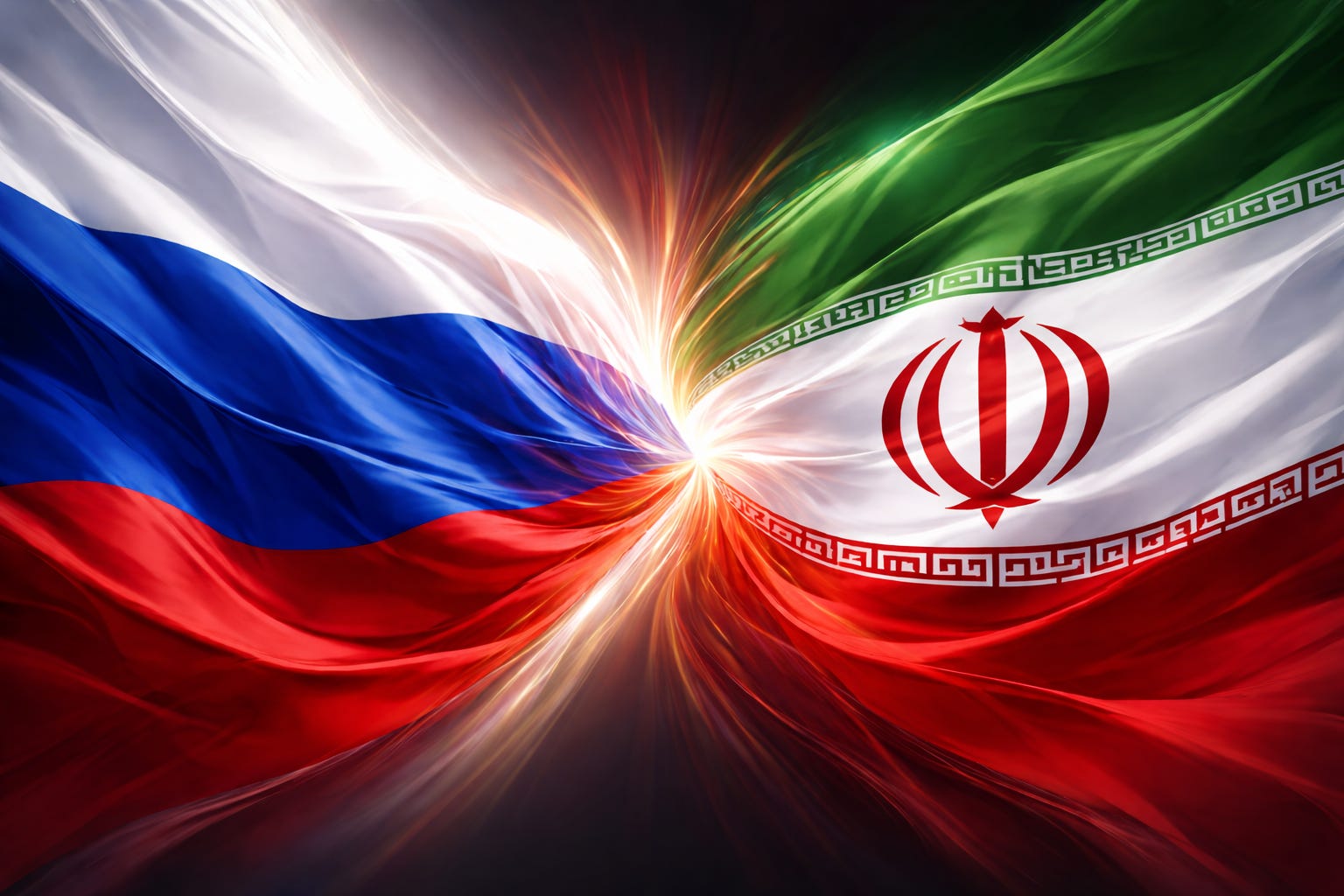
Russia is now helping Iran improve its drone warfare capabilities. If the United States simultaneously relaxes sanctions on Russian oil, it risks financing a military partnership that threatens American forces in the Gulf.
U.S. Intelligence believes that Russia is providing Iran with targeting information on U.S. military assets in the region, including the locations of American warships, aircraft, and key facilities on U.S. bases. The evidence does not show that Russia is directing targeting, but rather that it is providing information and intelligence that could improve Iranian targeting.
President Zelensky of Ukraine said recently, with “100%” certainty, that Russian-made Shahed drones were now being used against U.S. bases, though this has not been independently verified. Russia now manufactures its own version of the Iranian Shahed drones (known as the Geran) that it uses in mass attacks on Ukrainian infrastructure and urban centers. As the Ukrainians have improved their ability to intercept or shoot down the Shaheds/Gerans and other drones and missiles, the Russians have upgraded both the technology of the drones and the operational tactics used to defeat Ukraine’s air defenses.
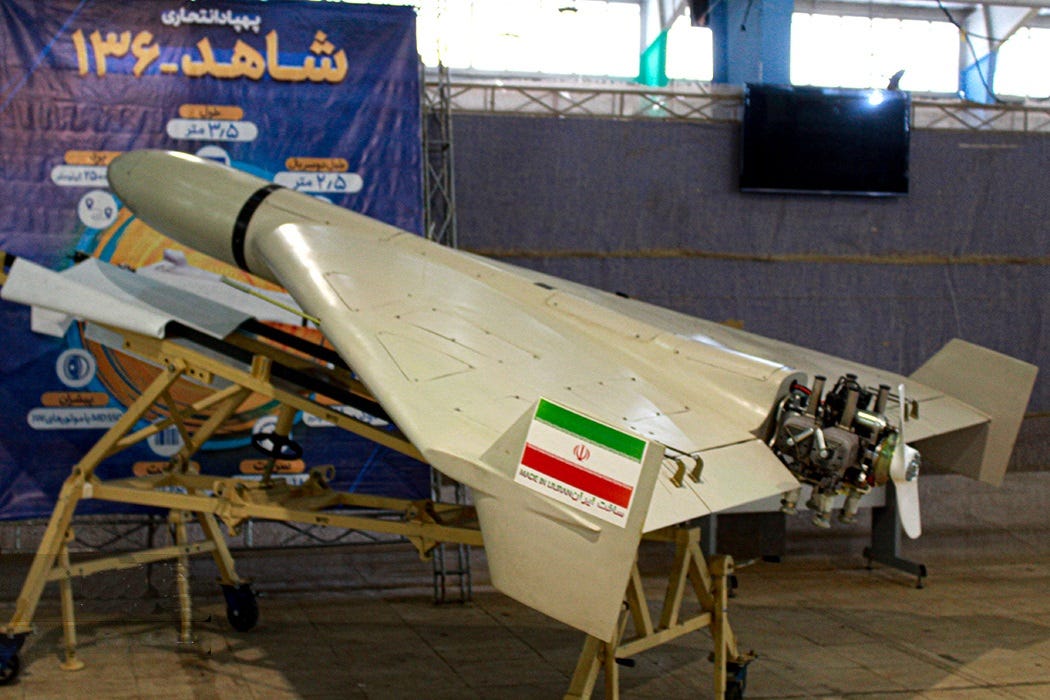
An Iranian Shahed 136 (Photo by Fars Media Corporation)
These and other press reports claim that Russia is providing information on drone operations that could improve their operational effectiveness against U.S. forces. Russia uses mass drone swarms flying at low altitudes—often equipped with onboard jamming and mixed with cheaper decoy drones—to confuse and overwhelm Ukrainian air defenses. The tactics Russia has developed in Ukraine are now being used by Iran, according to observers.
Among the objectives of the U.S. and Israeli military campaign are to reduce Iran’s ability to strike targets in the region using ballistic missiles and drones. They have targeted Iranian weapons stockpiles, missile launchers, manufacturing facilities, and command and control facilities. These strikes appear to be successful in reducing Iran’s ability to launch attacks against military and civilian targets in the region.
Ballistic missile capabilities will be difficult for the Iranians to reconstitute, especially for solid-fuel missiles that have ranges that can reach Israel. The missiles require specialized production equipment and materials that will be difficult, if not impossible, to replace in the short term. Launching them also requires specialized transporter-erector-launchers (TELs) as well as integrated guidance and electronics that can be operated only by highly trained crews.
Drones are far simpler weapons built from largely commercial components. Unlike missiles, drone production can be decentralized, ramp up quickly, and operate at high output volumes. The launch infrastructure necessary for drones is minimal, using trucks, simple racks, and improvised launch sites.
If it is true that Russia is providing Iran with Geran drones, as President Zelensky claims, Iran will have an inexhaustible supply of drones whose manufacturing facilities lie outside of the range of Israeli and American military forces. If Russia provides drone components to aid in Iranian domestic production, the U.S. and Israeli military will be hard pressed to prevent sustained, massed drone attacks on military, infrastructure, and civilian targets in the Gulf region.
Iran does not need huge numbers of drones to functionally close the Strait of Hormuz. It only needs to threaten commercial shipping to keep tankers from taking the risk. Even advanced naval vessels can be challenged by large drone swarms, particularly if attacks combine air and surface drones, fast attack craft, missiles, and electronic warfare. The type of coordinated drone swarms Russian forces have used against Ukrainian cities would put even modern U.S. naval vessels at risk.
The Trump administration relaxed sanctions on Russian oil sales in an effort to increase the supply of oil on global markets. Iran’s closure of the Strait of Hormuz is causing oil and gas prices to rise dramatically. Relaxing sanctions will have little effect on the price of gas at home, but will embolden and enable Russia in its support of Iran. Russia is earning more revenue because of the spike in oil prices - reportedly as much as $150 million a day — potentially as much as $12 billion a month. This will provide the Putin regime with much-needed cash that it can use to sustain its military campaign in Ukraine. But higher oil revenues also give Moscow greater freedom to expand military production and deepen cooperation with Iran.
Russia’s partnership with Iran is no longer theoretical. It is already shaping the battlefield—from Ukraine to the Persian Gulf.
If the United States relaxes sanctions on Russian oil while Moscow is assisting Iran militarily, it risks financing the very partnership that threatens American forces and global energy security.
Once again, you have uncovered for us the darkness behind this war and shed some valuable light. Thank you🙏🏼
Is giving aid and comfort to an enemy (Iran) or its allies (Russia) by lifting sanctions not within the definition of treason?